How to Plan a Project With a Concrete Contractor Near Me
Planning a concrete project looks simple from the curb. A driveway is a driveway, a patio is a patio, and a slab is just gray flatwork until the day it cracks, holds water, or ends up two inches too high against the garage. Most of the trouble starts long before the truck arrives. It starts during planning, when homeowners and property managers move too fast, compare bids that are not actually comparable, or assume every concrete contractor handles site prep, drainage, permitting, finishing, and cleanup the same way.
A well-planned job feels different from the first conversation. The scope is clear. The contractor asks good questions. You know what will happen if it rains, how joints will be laid out, where the concrete washout goes, and how long you need to stay off the surface. If you are searching for a concrete contractor near me, that early clarity matters more than almost anything else. It is what separates a clean, durable installation from a costly do-over.
Whether you need a new driveway, a backyard patio, a walkway, retaining features, or a commercial slab, the planning process follows the same basic truth: concrete is permanent enough that mistakes stay visible for years. That is why the smartest project plans focus less on pouring day and more on design, prep, drainage, and communication.
Start with the actual purpose of the slab
Before you call anyone, get specific about what the concrete needs to do. That sounds obvious, but this is where many projects drift off course. A front walkway has different demands than a driveway carrying trucks. A decorative patio needs a different finish strategy than a shop floor. A commercial loading area in North Texas takes a different beating than a small residential pad for trash bins.
When I have seen projects go sideways, it is usually because the owner described the project by shape instead of use. “I need a slab here” is not enough. A better starting point is, “I need a 16-by-20 patio for dining and a grill, I want it level with the back door, I need water to drain away from the house, and I want a finish that is not slippery when wet.” That one sentence gives a good concrete contractor something real to work with.
If you are evaluating a concrete contractor frisco homeowners recommend, expect that contractor to ask about load, foot traffic, drainage, shade, irrigation, nearby tree roots, and adjacent structures. In Frisco, soil movement, summer heat, and drainage patterns can all affect design choices. A contractor who skips those questions may still be able to pour concrete, but planning is where expertise shows up first.
Define the project boundaries before pricing
Bids get confusing when one contractor includes demolition, haul-off, regrading, and reinforcement, while another prices only the pour. On paper, the cheaper number wins. On the ground, it often does not.
Set boundaries early. Decide whether the job includes removing old concrete, relocating sprinklers, protecting fencing, adjusting gates, tying into existing surfaces, adding steps, changing elevation, staining or sealing, and restoring disturbed lawn areas. If you do not define these items, they usually reappear later as change orders or awkward conversations.
This matters even more on larger properties. A commercial concrete contractor frisco businesses hire may price mobilization, traffic control, saw cutting, subgrade correction, and inspection coordination separately. That does not mean the bid is inflated. It often means the scope is being shown honestly.
A contractor worth hiring will walk the site and point out what is missing from a vague plan. For example, if your driveway replacement meets a garage slab that has settled slightly, the transition detail matters. If your backyard patio ties into an existing cover or outdoor kitchen, the finished elevation matters. If your slab is near a pool, the finish and drainage matter a lot. These are planning issues, not afterthoughts.
What to ask during the first site visit
The first visit tells you more than the estimate itself. Watch how the contractor moves through the site. Do they pace off dimensions casually and leave, or do they crouch down, check grades, look for downspouts, ask where water sits after storms, and study the approach for trucks and equipment? A seasoned concrete contractor notices practical constraints because concrete work is rarely just about the concrete.
Here are five questions that expose whether the planning is sound:
- How will you prepare and compact the base for this site?
- How will the finished slab drain, and where will that water go?
- What reinforcement do you recommend for this use, and why?
- Where will control joints be placed to manage cracking?
- What curing process and timeline should I expect before full use?
Those questions are not meant to trap the contractor. They are meant to open up the real job. A solid answer may vary by project, but it should be specific. “We compact the base” is weaker than “We remove soft spots, bring in compactable material if needed, and compact in lifts until the grade is stable.” “It will drain fine” is weaker than “We pitch it a quarter inch per foot away from the house toward the side yard, and we will make sure the gate threshold still works.”
When people search best concrete contractor frisco, they usually think about finish quality, straight forms, and neat edges. Those matter. But the best concrete contractor frisco jobs are often won before the pour through good site reading and realistic planning.
Drainage is not a side issue
If there is one planning mistake that causes the most regret, it is poor drainage. Concrete can be strong, attractive, and properly reinforced, then still become a problem because water was told to move in the wrong direction. I have seen beautiful new patios push runoff toward a foundation, new walkways create muddy low spots, and driveway replacements leave garage thresholds vulnerable during heavy rain.
Planning drainage means thinking in three dimensions. The slab itself needs slope. The surrounding yard needs to accept the runoff. Existing downspouts, French drains, splash blocks, swales, and neighboring elevations all matter. In some cases, the slab should not be enlarged because the site has nowhere for the extra water to go. In other cases, the answer is adding a drain, revising grade, or changing the shape of the work area.
This is especially relevant when hiring a concrete contractor frisco tx property owners trust. North Texas weather can swing from long dry spells to heavy storms, and expansive soils do not forgive water management mistakes. A good plan accounts for both the slab and the site around it.
Understand thickness, reinforcement, and base prep
Homeowners often ask, “How thick should my concrete be?” The honest answer is that thickness alone does not guarantee durability. A thicker slab placed on poorly prepared ground can fail faster than a standard slab over a well-compacted base.
For typical residential flatwork, many contractors work within common thickness ranges depending on use, but the important part is matching the assembly to the job. Passenger vehicle driveways, RV parking pads, trash enclosure pads, and basketball courts do not all need the same support strategy. Reinforcement choice also depends on the application. Wire mesh, rebar, fiber additives, or combinations may be appropriate, but they only perform well when the slab design and base prep are correct.
Base preparation is one of the least glamorous parts of the job and one of the most important. If the site has soft spots, organic material, poorly compacted fill, or drainage issues, pouring over it only hides the problem for a while. This is where a reputable concrete contractor earns trust. They may tell you the job needs more prep than you expected. That is not bad news. It is usually the truth you want before the truck shows up.
If you are comparing companies and one bid is dramatically lower, look hard at what it assumes about excavation, fill, compaction, and reinforcement. Low numbers often come from skipped steps, not from efficiency.
Finishes are functional, not just decorative
Finish is another area where planning needs more attention than it usually gets. Clients often choose based on appearance alone, then discover they selected something impractical for the location. A smooth finish near a pool can be slick. A heavily textured finish on a dining patio can be harder to clean. Decorative saw cuts can look sharp, but they need to work with joint placement and slab dimensions.
Broom finish remains popular because it provides traction and a clean, classic look. Exposed aggregate can add visual interest and grip, but it may not suit every architectural style. Stamped concrete gives the appearance of stone or pavers, though it requires more planning for color, release, sealing, and long-term maintenance. Integral color and surface-applied stain can both work, but each has its own wear pattern and repair limitations.
An experienced contractor will not only show photos. They will ask how the space will be used. Barefoot traffic, patio furniture, freeze-thaw exposure in rare cold snaps, grease near grills, and leaf staining under shade trees all affect finish decisions.
Permits, HOA rules, and utility locations
Many delays come from administrative issues rather than field conditions. Some cities require permits for certain flatwork, approach changes, sidewalks, or commercial site work. HOA communities may have their own approval process, setback requirements, finish restrictions, or color limits. Utility locates can affect excavation schedules. If the work crosses easements or ties into public areas, the planning becomes more technical.
Do not assume your contractor handles every approval automatically. Ask who is responsible. In a residential setting, some contractors will help prepare drawings or scope details for HOA review, while the homeowner submits the package. On larger projects, a commercial concrete contractor frisco firms use may coordinate directly with project managers, inspectors, and civil drawings.
This is also where local experience helps. A concrete contractor who works in Frisco regularly is more likely to understand local expectations, scheduling realities, and common site conditions. That does not make every local contractor equal, but it does reduce the learning curve.
The estimate should read like a plan, not a guess
A useful estimate does more than provide a total. It gives shape to the work. At minimum, it should describe dimensions or approximate square footage, demolition if applicable, base preparation assumptions, reinforcement, concrete thickness, finish type, jointing, cleanup, and any exclusions. The stronger the estimate, the fewer surprises later.
Pay attention to what is missing. If it does not mention drainage, access challenges, sealing, or cure time, ask. If it promises a fast turnaround but says nothing about weather delays or subgrade issues, ask. Good contractors do not oversimplify a job just to win it. They explain what can change and why.
Some of the best estimates I have seen also include notes on owner responsibilities, such as moving vehicles, clearing access, keeping pets inside, or shutting off irrigation before the pour. That level of detail usually reflects organized field execution.
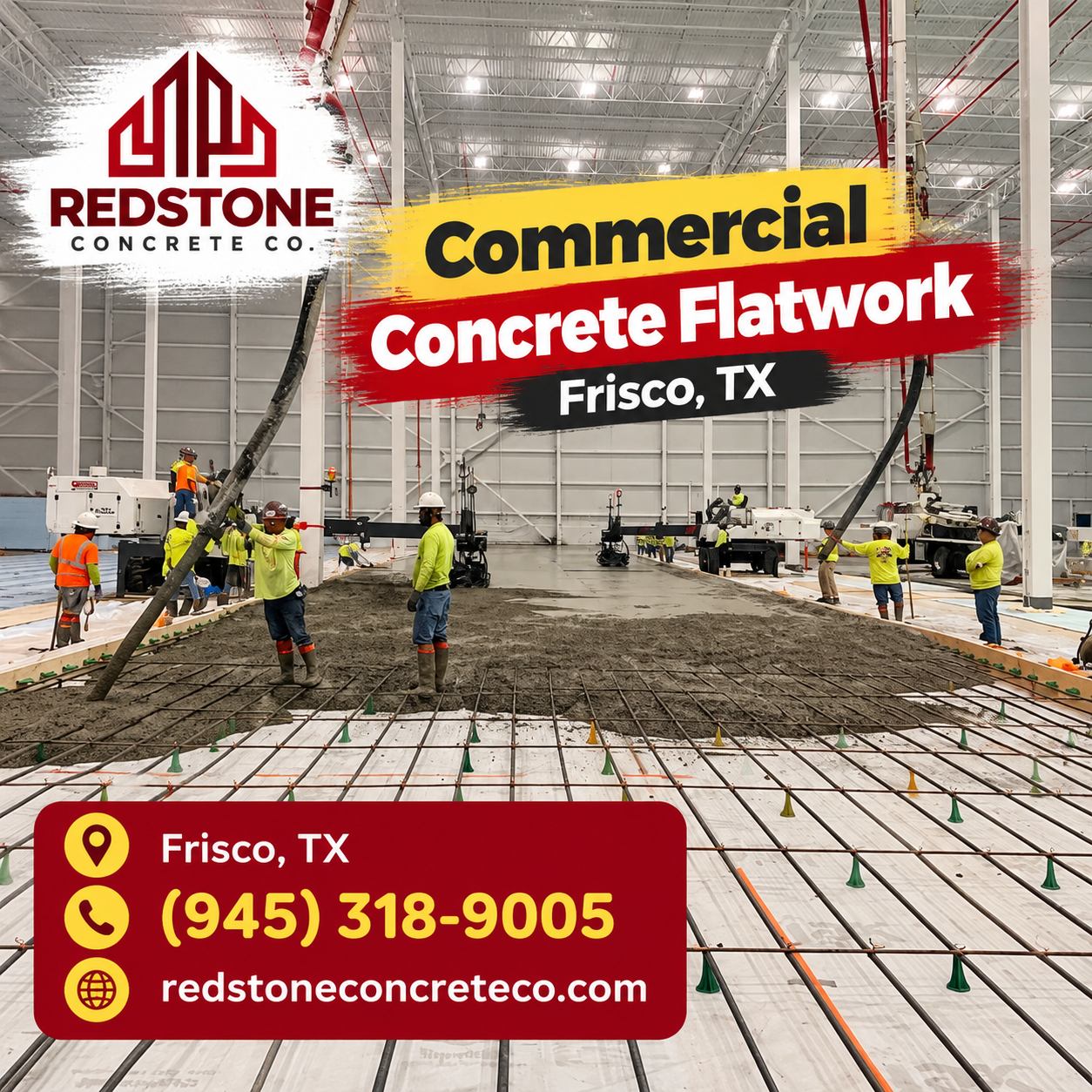
If you are researching names like Redstone Concrete Co or searching best concrete contractor frisco texas Redstone Concrete Co, use the same standard for everyone you interview. Ask for scope clarity, not just a good sales pitch. A polished website helps, but a detailed and realistic estimate tells you more.
Price matters, but sequence matters more
Concrete projects fail when clients buy only the number and ignore the sequence of work. The sequence is where quality lives. Demolition, grading, forms, compaction, reinforcement placement, pour timing, finishing, cutting joints, curing, sealing if applicable, and site cleanup all need to happen in the right order.
A cheap bid can still look fine for a few months. Then standing water appears. Hairline cracks widen. Corners chip because joints were late or badly placed. Edges settle because the subgrade near the forms was loose. These are not abstract possibilities. They are common outcomes of rushed work.
There is a practical middle ground between overbuilding and underplanning. A good contractor will tell you when a premium upgrade is worth it and when it is not. For example, a homeowner may not need the most decorative finish package for a side-yard utility pad, but they may absolutely need better subgrade prep because the area stays wet after storms. That judgment is what you are really hiring.
Scheduling around weather and access
Concrete scheduling always looks cleaner on paper than it does in real life. Weather changes fast, especially in warm climates. Rain can delay excavation, soften subgrade, interfere with finishing, or alter cure conditions. Extreme heat can shorten working time. Cold snaps can affect placement strategy. The contractor should talk openly about how weather may shift the schedule.
Access also deserves more discussion than it usually gets. Can trucks reach the pour area directly, or will the crew need pumps, buggies, or wheelbarrows? Will gates need temporary removal? Are overhead lines, septic components, HVAC equipment, or landscaping features in the way? Does the work require protecting neighboring surfaces from splatter or rutting?
These details influence labor, cost, and duration. They also influence whether the plan is realistic. A contractor who has done a lot of residential infill or backyard work will ask access questions early because they know that “simple patio” jobs become complicated when the truck cannot get close.
Plan for the days after the pour
Many owners focus hard on selection and pricing, then forget the part that protects the investment: curing and early use. Fresh concrete needs time and care. The exact timeline depends on weather, mix, thickness, and application, but the first few days are critical. Keep people, pets, furniture, grills, and vehicles off the surface according to the contractor’s guidance. If sealing is part of the job, understand when that happens and what maintenance follows.
This is also the right time to ask about normal versus abnormal cracking. All concrete can crack. The goal is to manage where, how, and to what degree, not to pretend cracking is impossible. Control joints help direct movement. Proper base prep and curing reduce risk. A trustworthy contractor will explain that reality plainly, without trying to sell an unrealistic promise.
One practical habit I recommend is writing down the aftercare instructions before the crew leaves. Owners often remember the broad advice but forget the details, especially if several trades are working around the same time.
Warning signs before you sign
There are certain red flags that come up over and over again in concrete work. They are easy to miss because they often sound confident in the moment. A contractor who gives a price without seeing the site, dismisses drainage questions, guarantees “no cracks,” refuses to spell out the scope, or pressures you to commit immediately is making planning harder, not easier.
The strongest contractors usually show restraint. They talk through options. They explain trade-offs. They are comfortable saying, “We need to look closer at that area,” or “That connection to the existing slab may need an adjustment once we open it up.” Real jobsite experience tends to make people more precise, not more flashy.
If you are considering Redstone Concrete Co or another local company, look for evidence of that precision. Ask about projects similar to yours. Ask what typically causes delays or added cost. Ask what they wish homeowners knew before starting. The quality of those answers is often more revealing than a gallery of finished photos.
A simple planning framework that prevents expensive mistakes
If you want a practical way decorative concrete flatwork to organize your project before hiring, keep these five points in view:
- Define the use clearly, including load, drainage needs, and finish expectations.
- Compare estimates by scope, not just total price.
- Confirm who handles permits, approvals, and utility coordination.
- Ask detailed questions about base prep, reinforcement, joints, and curing.
- Get post-pour access rules and maintenance guidance in writing.
That framework works for a small residential patio and for a larger commercial expansion. The scale changes, but the planning principles do not.
Why local judgment matters in Frisco
Local knowledge is not marketing fluff in concrete work. Soil behavior, drainage patterns, municipal requirements, and weather habits shape decisions. A concrete contractor frisco homeowners trust should understand how North Texas heat affects placement and finishing windows, how expansive soils influence prep, and how neighborhood standards can affect design approvals. A concrete contractor frisco tx businesses rely on should also understand staging, access, and coordination for active sites.
That local judgment is part of what people mean when they search for the best concrete contractor frisco. They are not only looking for someone who can place and finish concrete. They are looking for someone who can anticipate what the site will demand before the forms are set.
The right contractor will help you slow down in the right places. They will push for better prep when the ground is soft. They will revise slope when runoff would create a bigger problem. They will separate necessary upgrades from cosmetic upsells. They will treat the estimate like a job plan, not just a sales document.
A concrete project should feel permanent in a good way. That starts with planning, honest site assessment, and a contractor who understands that the most important part of the pour often happens before the concrete arrives.